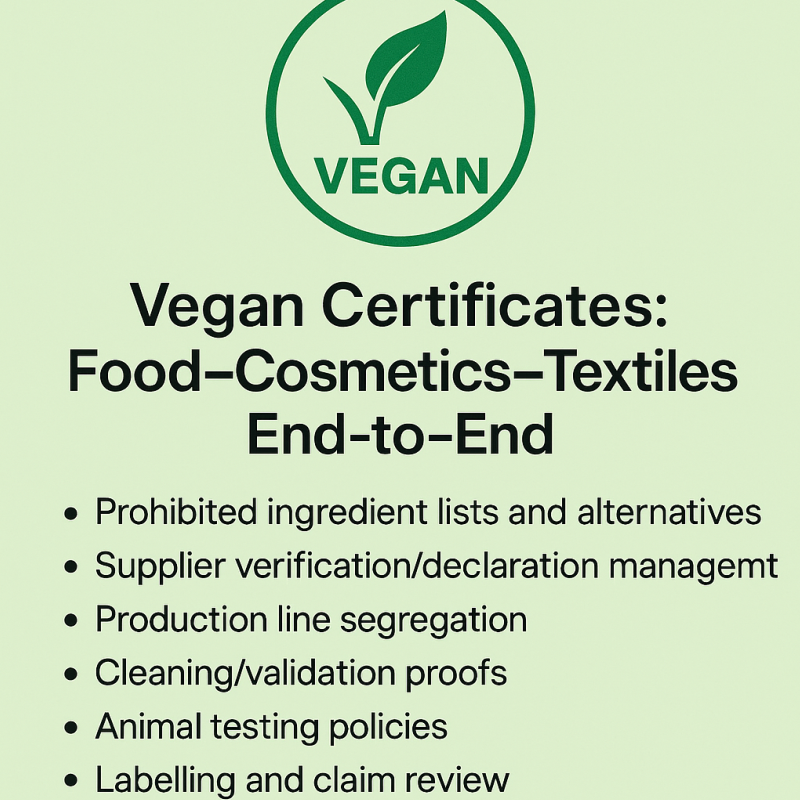
Vegan Certificates: End-to-End for Food–Cosmetics–Textiles
Vegan certificates are gaining importance across industries as a key assurance of sustainability, ethical production, and consumer trust. In food, cosmetics, and textile sectors, ensuring that products contain no animal-derived ingredients and are not tested on animals has become a critical factor in brand positioning. End-to-end certification provides transparency for both producers and consumers.
This content addresses the essential parameters of vegan certification, covering everything from prohibited ingredients lists to audit workflows. It also explores strategies for the combined use of multiple certificates and the alignment with evolving market expectations.
Key Insight
Vegan certification goes beyond product content. It includes supply chain management, production lines, and labeling claims, delivering a holistic framework that strengthens brand competitiveness.
Prohibited Ingredients and Alternatives
A fundamental step in vegan certification is the definition of prohibited ingredients. These cover substances of animal origin, whether directly or indirectly derived. In food, this includes gelatin, whey, and casein; in cosmetics, beeswax, lanolin, and carmine; in textiles, silk, leather, and wool fall into this category.
The development of alternative materials enables brands to meet certification requirements while supporting sustainable production. Plant-based proteins, microbial fermentation products, and synthetic or recycled fibers are among the most notable solutions.
Supplier Verification and Declarations
Vegan certification extends beyond the final product to include the entire supply chain. Supplier verification processes are therefore crucial. Each supplier must declare the vegan suitability of the raw materials they provide and support their claims with documentation.
Supplier management involves declaration forms, third-party analysis reports, and periodic audits archived digitally. This ensures traceability and transparency for both internal reviews and certification authorities.
"Reliable certification is built on a strong system of supplier verification."
Production Line Segregation
To prevent cross-contamination, vegan certificates require production line segregation. When both vegan and non-vegan products are manufactured in the same facility, separate equipment and processes are mandatory. This is especially critical in food and cosmetics manufacturing.
Segregation includes dedicated equipment, separate production schedules, and exclusive storage areas. All procedures must be documented and integrated into quality management systems to ensure consistency.
Tip
Segregation protocols can be effectively managed when integrated with Good Manufacturing Practices (GMP) standards.
Cleaning and Validation Evidence
One of the most critical requirements in vegan certification is the standardization of cleaning protocols. When the same production lines are used after non-vegan manufacturing, thorough cleaning is mandatory to avoid cross-contamination. These cleaning processes must not only be routine but also documented and verifiable.
Validation evidence includes chemical analysis reports, surface swab tests, cleaning logs, and third-party laboratory results. All documents are archived and updated regularly to be presented during audits.
Animal Testing Policies
Especially in cosmetics and personal care, a strict “no animal testing” policy is a cornerstone of vegan certification. Manufacturers must establish an official policy and ensure that all R&D processes adhere to it without exception.
The policy framework typically covers supplier declarations, the use of alternative testing methods, and compliance with international regulations. This ensures legal conformity while also safeguarding ethical standards.
"Rejecting animal testing is one of the core reflections of the vegan philosophy."
Labeling and Claim Verification
Labeling plays a decisive role in marketing vegan-certified products. Misleading or unverified claims can damage consumer trust and result in the suspension of certification. Labels must therefore contain accurate and verifiable information approved by regulatory authorities.
The verification process covers claims such as “100% Vegan” or “Cruelty-Free” that must be backed by official documentation. The use of logos and symbols is also subject to the guidelines of the certifying body.
Important Note
Mislabeling not only harms brand reputation but may also trigger legal consequences.
Sampling and Testing Plan
Throughout the vegan certification process, products are sampled at defined intervals for laboratory testing. These tests confirm the absence of animal-derived ingredients and verify compliance with production requirements. Sampling frequency depends on risk analysis and product categories.
A testing plan includes the number of samples, analysis parameters, frequency, and the accredited laboratories responsible. Such transparency strengthens the producer’s credibility during audits and ensures traceability across production batches.
Audit and Renewal Workflow
Vegan certificates are valid for a specific period and require renewal once the validity expires. Renewal is not limited to documentation checks but also includes on-site inspections. During these audits, production lines, storage facilities, cleaning records, and supplier declarations are re-examined.
The workflow typically involves three stages: preparation, on-site audit, and reporting. Preparation covers the collection of documents, the on-site audit focuses on verification, and the reporting stage involves submitting findings to the certification body. This cycle ensures both compliance and continuous improvement for producers.
Tip
Initiating the renewal process at least three months in advance helps ensure uninterrupted certification.
Integration with Multiple Certifications
Vegan certificates are often combined with other quality and sustainability standards. For instance, ISO 22000 for food safety, ISO 22716 for cosmetics GMP, or GOTS for organic textiles can be integrated alongside vegan certification. This multi-certification strategy strengthens compliance and expands market reach.
Integrating certifications provides cross-benefits across the supply chain. Producers that demonstrate environmental, social, and ethical responsibility simultaneously are better positioned in global markets and gain higher consumer trust.