
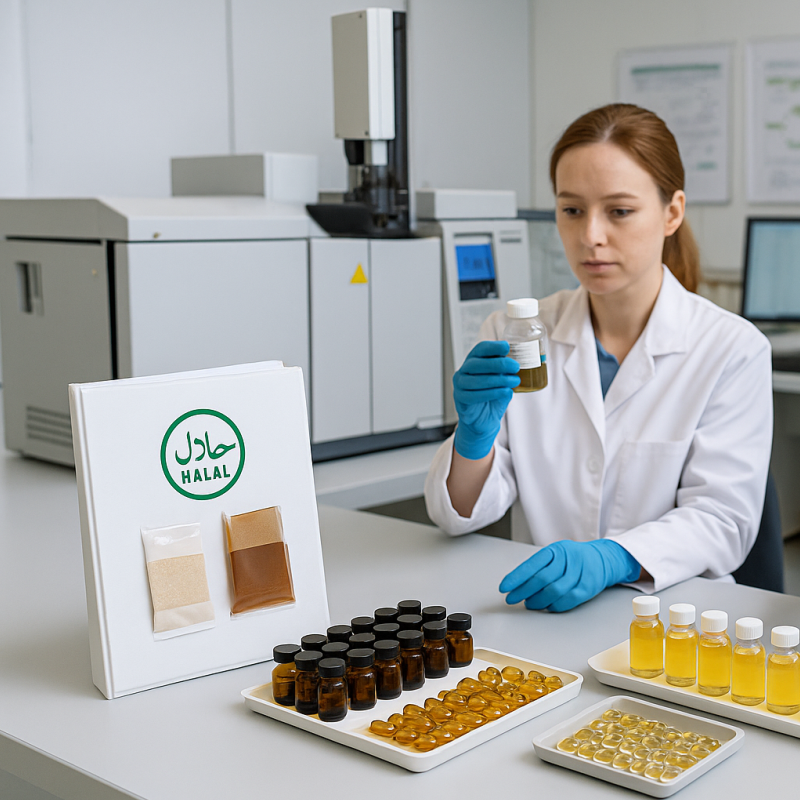
Risk-Based Test Plan: Product Group Approach
In halal laboratory testing, the very first step is the creation of a risk-based test plan. This approach ensures that limited resources are allocated to the areas of greatest concern, while products with minimal risk are tested at a lower frequency. Testing every product at the same frequency and with the same parameters is not cost-effective nor sustainable. Therefore, products are categorized into high-risk, medium-risk, and low-risk groups.
Risk evaluation considers multiple factors such as product composition, complexity of the supply chain, history of non-conformities, raw material sources, and regulatory requirements of target markets. For example, gelatin-based capsules are classified as high-risk due to the possibility of porcine derivatives, while alcohol-containing flavor carriers or fatty acid emulsifiers are similarly high-risk. On the other hand, single-source, plant-based products with simple production processes are usually low-risk.
Risk-based planning also applies to suppliers. Suppliers with past non-conformities or incomplete certification documents should be tested more frequently, while long-term, reliable suppliers with accredited reports may be monitored less intensively. This differentiation ensures both cost control and enhanced reliability of test results.
Another critical dimension is export market requirements. Test plans must consider the regulatory frameworks of importing countries. For instance, Gulf countries impose stricter thresholds on alcohol residues, whereas Malaysia and Indonesia place higher emphasis on the origin of gelatin and enzymes. Hence, a risk-based plan must align with both product-specific risks and the compliance standards of target markets.
Once products are classified into risk groups, test frequency and parameters are established. High-risk items may require batch-by-batch testing, medium-risk items may undergo quarterly or monthly checks, while low-risk items may be subject to only annual random testing. This flexible system prevents laboratory overload while ensuring stronger oversight on critical product categories.
A risk-based test plan should also be integrated with CAPA (Corrective and Preventive Action) systems. If a non-conformity is detected in a high-risk category, preventive actions must be taken not only for the specific batch but across the entire product line. This systemic approach ensures long-term risk mitigation and compliance sustainability.
The effectiveness of such plans depends on regular reviews. Annual trend analysis helps identify recurring issues and reclassify product groups accordingly. For example, a low-risk product repeatedly failing tests may be reclassified into a higher-risk group, while consistently compliant products may have reduced test frequency to optimize costs.
In summary, a risk-based test plan is not only a tool for cost management but also a mechanism to build consumer trust, market acceptance, and certification continuity. It serves as a science-backed strategic roadmap for halal compliance management.
Implementation Steps
1) Categorize products based on composition, supplier, market, and test history.
2) Apply frequent and detailed testing for high-risk groups.
3) Plan periodic tests (monthly/quarterly) for medium-risk groups.
4) Use annual random sampling for low-risk categories.
5) Continuously evaluate supplier performance and adjust plans accordingly.
6) Conduct at least one annual review supported by trend analysis.
7) Integrate the plan with CAPA systems to prevent recurrence of non-conformities.
"Risk-based testing is not only about laboratory efficiency; it is essential for sustainable halal certification." – Food Safety Specialist
Note: Risk-based test planning should comply with ISO 17025 accreditation requirements, OIC/SMIIC halal standards, and local regulatory frameworks.
Alcohol Residue and Fatty Acid Profile Tests
One of the most critical aspects of halal laboratory analysis is alcohol residue testing. In many food, beverage, and additive production processes, alcohol may be used as a solvent or flavor carrier. According to halal standards, residues above 0.1% pose a serious non-conformity risk. For this reason, both producers and certification authorities place alcohol testing at the center of routine controls.
The most common methods for detecting alcohol are Gas Chromatography (GC) and Mass Spectrometry (MS). These techniques allow trace-level detection of volatile compounds. Fermented beverages, sauces, flavorings, and confectionery products are typically subject to these tests. In addition, solvents used during processing or cleaning stages can also leave residues, making control essential.
Fatty acid profile analysis plays an equally vital role, particularly for differentiating between animal and plant-based fats. Porcine fat and its derivatives represent one of the highest risks in halal compliance. Analytical techniques such as Fourier Transform Infrared Spectroscopy (FTIR), High-Performance Liquid Chromatography (HPLC), and Gas Chromatography with Flame Ionization Detection (GC-FID) are widely used to identify the specific fatty acid markers unique to pork fat.
Fatty acid profiling does more than detect pork derivatives; it also verifies the accuracy of product labeling. For instance, a product marketed as “100% vegetable oil” but found to contain animal fat would constitute both a halal violation and a breach of consumer trust. These analyses also serve as safeguards against fraudulent practices within raw material supply chains.
Alcohol residue and fatty acid profile tests are therefore not just quality control measures, but essential tools for regulatory compliance and brand protection. By implementing them routinely, producers demonstrate transparency to certification bodies and reinforce consumer trust. For exporters, these tests are also critical to meet the specific regulations of destination markets.
These analyses also feed directly into CAPA processes. For example, if a product batch tests above alcohol thresholds, corrective action might involve process adjustments or ingredient substitution, while preventive action could include supplier re-evaluation or stricter raw material checks. Similarly, if non-conforming fatty acid profiles are detected, root cause analysis extends to suppliers, formulations, and even transportation conditions.
Key Testing Parameters
1) Threshold for alcohol residues: 0.1%.
2) Detection of volatile compounds using GC-MS.
3) Fatty acid profiling with FTIR and HPLC.
4) Identification of porcine fat biomarkers.
5) Verification of labeling claims against laboratory findings.
6) Activation of CAPA protocols in case of non-conformities.
"The accuracy of testing methods determines not only the reliability of results but also consumer confidence." – Laboratory Analyst
Note: Alcohol and fatty acid tests are among the most frequently required analyses by OIC/SMIIC, GSO, and national halal certification bodies.
Gelatin, Enzyme and Additive Analyses
In halal laboratory testing, one of the most sensitive and debated areas is the verification of the sources of gelatin, enzymes, and additives. These ingredients are widely used in food, pharmaceuticals, cosmetics, and dietary supplements, and their origin directly affects halal status. As such, certification bodies include these analyses as an essential component of their verification protocols.
Gelatin analysis: Gelatin is most commonly derived from porcine or bovine sources. For halal compliance, only gelatin from cattle slaughtered according to Islamic requirements is permissible. Laboratory techniques such as DNA analysis, protein typing, and peptide fingerprinting are applied to determine the source. Porcine gelatin carries identifiable genetic markers, making it relatively straightforward to detect. However, even for bovine gelatin, compliance depends on the slaughtering method, making verification indispensable.
Enzyme analysis: Enzymes such as lipases, proteases, and amylases are widely used in food production. These may be derived from animal tissues or microbial sources. While microbial enzymes are generally considered halal, the culture media used in their production must also be verified, as it may contain non-halal components. For animal-derived enzymes, halal compliance hinges on the slaughtering practices of the source animals.
Additive analysis: Emulsifiers (such as E471), stabilizers, colorants, and flavor carriers are among the most critical additives requiring scrutiny. For example, fatty acid esters can be derived from porcine fat, necessitating detailed fatty acid profiling. Likewise, some flavorings are prepared using alcohol as a solvent. Laboratory analysis therefore assesses not only the final ingredient composition but also the entire production process.
Testing gelatin, enzymes, and additives is not only about halal compliance but also about label integrity and consumer protection. Mislabeling or undeclared ingredients can lead to certification withdrawal, product recalls, and legal penalties. Proactive testing ensures transparency and builds consumer trust.
These analyses are also crucial for international trade. For instance, Indonesia and Malaysia impose strict requirements for gelatin and enzyme origins, while Gulf countries focus heavily on fatty acid profiles in additives. Producers exporting to multiple regions must therefore ensure their test programs align with the requirements of each target market.
In cases of non-conformity, CAPA procedures must be implemented. If alcohol residues or porcine markers are found in additives, corrective actions may involve product recall or reformulation, while preventive actions may include stricter supplier audits and process reviews. Such measures protect certification credibility and consumer confidence.
Critical Points in Analysis
1) Verify gelatin sources with DNA and protein analysis.
2) Assess both the origin and production media of enzymes.
3) Conduct fatty acid profiling and solvent checks for additives.
4) Compare laboratory findings with label claims.
5) Apply CAPA processes immediately in case of non-conformity.
6) Adapt test protocols to target market regulatory requirements.
"In halal testing, even a minor additive can determine the compliance status of an entire product." – Food Technologist
Note: Gelatin, enzyme, and additive analyses are considered high-risk areas, especially for imported products, and thus require multi-layered testing protocols.
Sampling Planning and Storage Conditions
The reliability of halal laboratory tests depends heavily on proper sampling planning and appropriate storage conditions. Even the most advanced analytical methods are rendered invalid if the samples are not representative of production batches or if they are mishandled during storage and transport. For this reason, sampling is not just a technical step, but a strategic component of the entire halal certification process.
When preparing a sampling plan, several factors must be considered: product risk level, batch size, supplier reliability, and previous non-conformity records. High-risk categories, such as gelatin-based capsules, additive-rich beverages, or flavor carriers, require a greater number of samples, while low-risk categories can be monitored through random or periodic sampling. Importantly, both raw materials and finished products must be included in the sampling plan to ensure full supply chain coverage.
According to best practices, each sample must be assigned a unique identifier code that includes details such as batch/lot number, supplier name, production date, and sampling location. This traceability system enables direct comparison between laboratory results and production records, simplifying root cause analysis in the event of a non-conformity.
Storage conditions are equally crucial. Products requiring cold chains should be maintained at 2–8°C, frozen samples at -18°C or below, and dry products in moisture-free and light-protected environments. Containers should be made of food-grade materials such as glass or polypropylene to prevent contamination. During transport, temperature logs must be kept to ensure the integrity of the cold chain or other storage requirements.
A best practice in halal testing is the use of retention samples. These backup samples allow re-testing in cases of disputed or borderline results, ensuring transparency with both clients and certification bodies. Retention samples should be stored for a predefined period in line with certification body requirements, enabling cross-verification if issues arise later.
An annual sampling plan should also incorporate international standards such as ISO 2859 and Codex Alimentarius sampling guidelines. Furthermore, test results should feed back into the plan to allow adjustments; for example, if repeated non-conformities are detected with a particular supplier, the number of samples for that supplier should be increased. This dynamic approach balances resource efficiency with compliance assurance.
Best Practices for Sampling and Storage
1) Assign a unique identifier to each sample with complete metadata.
2) Define sample size based on risk assessment and product type.
3) Collect separate samples for raw materials, intermediates, and final products.
4) Store samples according to product-specific requirements (cold chain, frozen, dry).
5) Use retention samples for verification and dispute resolution.
6) Review and update sampling plans annually using trend analysis.
"Sampling errors compromise not just a single test but the integrity of the entire certification process." – Audit Specialist
Note: Sampling and storage procedures must comply with ISO 17025, OIC/SMIIC halal guidelines, and national food safety regulations.
Laboratory Selection: Accreditation and Scope
The reliability of halal testing outcomes depends largely on the accreditation status and scope of services of the laboratory performing the analysis. Not all laboratories have the same technical infrastructure, methodological expertise, or oversight mechanisms. Selecting the wrong laboratory can result in invalid results, rejected reports, and significant delays in certification processes.
The minimum requirement is accreditation according to the ISO/IEC 17025 standard, which demonstrates technical competence and reliable measurement capability. In addition, the accreditation scope must explicitly cover parameters relevant to halal testing, such as alcohol detection, fatty acid profiling, DNA analysis, and additive verification. Without these, the reports may not be accepted by halal certification authorities.
Geographic recognition is also a decisive factor. For exporters, it is safer to work with laboratories recognized by official bodies in the destination market. For example, Gulf countries often require test reports from laboratories approved by their local authorities, ensuring smoother customs clearance and faster acceptance.
Technical capacity must also be evaluated. The laboratory’s equipment calibration records, reference standards, and method validation documentation should be regularly reviewed. Participation in proficiency testing programs, where multiple labs analyze identical samples and compare results, is a strong indicator of reliability and competence.
Independence and impartiality are equally important. Laboratories with financial or operational ties to the manufacturer may raise credibility concerns. Certification bodies typically require proof of impartiality, ensuring that results are free from conflicts of interest. Regular external audits further reinforce trust.
Another key element is reporting format. Certification authorities expect standardized reports containing essential details such as the testing method used, type of equipment, measurement uncertainty, sample codes, and compliance interpretations. Missing or non-standardized reports can cause certification delays or rejections.
In summary, laboratory selection is not simply about finding a service provider; it is about securing a reliable partner whose capabilities, independence, and recognition directly influence the speed, acceptance, and sustainability of halal certification.
Checklist for Laboratory Selection
1) Does the laboratory hold ISO/IEC 17025 accreditation?
2) Are halal-relevant parameters included in its scope?
3) Is the laboratory recognized in the target export markets?
4) Are calibration, validation, and proficiency testing records up to date?
5) Does the laboratory demonstrate impartiality and independence?
6) Is the reporting format aligned with certification authority requirements?
"Choosing the right laboratory secures not only valid test results but also the credibility and speed of certification." – Halal Accreditation Expert
Note: The official validity of halal test reports depends directly on the accreditation and scope recognition of the laboratory issuing them.
Result Interpretation and Retesting
In halal laboratory testing, it is not enough to simply generate analytical data; correct interpretation of results and, when necessary, retesting are essential. Laboratory findings must be evaluated in light of both scientific evidence and halal regulatory requirements. For example, a product with 0.08% alcohol residue may be technically classified as “trace presence,” but some certification authorities may interpret it as non-compliant, depending on their tolerance thresholds. This demonstrates that interpretation is as important as measurement itself.
One critical factor in result interpretation is measurement uncertainty. Every laboratory test carries an inherent margin of error, and this must be disclosed in reports. Overlooking uncertainty can lead to discrepancies when the same sample is tested by different laboratories. Certification authorities emphasize consideration of uncertainty, particularly when results fall near compliance limits.
Retesting procedures are triggered in cases of suspicious, borderline, or inconsistent results. Retention samples are used to verify the original findings. This not only ensures transparency but also builds trust with clients and certification bodies. In some cases, cross-validation with alternative methods—such as using both GC-MS and FTIR for verification—strengthens result reliability.
The implications of result interpretation go beyond science; they carry legal, commercial, and reputational consequences. A misinterpreted report can lead to product recalls, shipment rejections, or brand damage. For this reason, result evaluation should involve collaboration between laboratory analysts, halal certification consultants, and regulatory bodies.
Trend analysis plays an additional role in result interpretation. By comparing results across multiple testing cycles, recurring issues with specific products, suppliers, or production lines can be identified. This information feeds into risk-based planning and CAPA processes, ensuring that systemic problems are addressed, not just isolated cases.
Ultimately, result interpretation in halal testing is a multi-layered process, combining technical validation, religious compliance, and commercial risk management. It requires scientific precision, regulatory alignment, and transparent communication.
Best Practices in Interpretation and Retesting
1) Always include measurement uncertainty in reports.
2) Retest borderline or suspicious results using retention samples.
3) Use alternative analytical methods for cross-validation.
4) Interpret results in line with both technical data and halal standards.
5) Conduct annual trend analyses to detect recurring non-conformities.
6) Share results transparently with certification bodies and clients.
"A test result is not just a number—it represents responsibility to regulators and trust from consumers." – Halal Certification Specialist
Note: Retesting procedures are mandatory under ISO 17025 and halal certification protocols, ensuring result reliability and compliance credibility.
Non-Conformities, Root Cause and CAPA
In halal laboratory testing, one of the most critical processes is the management of non-conformities. When alcohol residues, porcine fat biomarkers, or uncertified gelatin sources are detected, it is not only the product batch that is at risk but also the integrity of the entire production process. At this point, Root Cause Analysis (RCA) and Corrective and Preventive Actions (CAPA) must be implemented systematically.
Root Cause Analysis (RCA) seeks to identify the underlying cause of a problem rather than treating surface symptoms. For example, detecting alcohol residue in a product batch might initially appear to be linked to a flavor carrier, but deeper investigation could reveal issues with solvent use by the supplier or inadequate storage conditions. Without determining the true root cause, corrective measures will be short-lived and ineffective.
Corrective Actions focus on resolving the identified non-conformity. These may include recalling non-compliant product batches, conducting supplier audits, or revising production processes. The aim is to ensure that the same problem does not affect other products already in circulation.
Preventive Actions go a step further, aiming to eliminate potential future risks. If a non-conforming additive is identified, preventive steps may include increasing the testing frequency for all additives from that supplier or reformulating products with lower-risk alternatives. Preventive measures reduce the likelihood of similar non-conformities reoccurring in the future.
Effective CAPA processes also require documentation and reporting. Each case of non-conformity should be logged, including root cause findings, corrective actions, preventive strategies, and an evaluation of their effectiveness. These records serve as evidence for certification bodies and are critical during audits.
Another essential dimension of CAPA is staff training and awareness. Many non-conformities stem from improper handling, inadequate procedures, or a lack of awareness of halal requirements. Regular training sessions for employees on halal standards, hygiene practices, and process controls significantly reduce such risks.
Ultimately, managing non-conformities through RCA and CAPA is not just about technical fixes; it is about creating a systematic management process that ensures long-term compliance, protects brand reputation, and strengthens consumer trust.
Key Steps in CAPA Management
1) Identify and document the non-conformity.
2) Conduct Root Cause Analysis (RCA).
3) Implement corrective actions (recall, process revisions, supplier audits).
4) Apply preventive actions (increased testing, reformulation, staff training).
5) Keep detailed documentation for audit and certification review.
6) Regularly assess CAPA effectiveness and update procedures.
"A non-conformity is not just a failure; it is an opportunity to strengthen the entire system." – Quality Management Specialist
Note: CAPA practices are integral to ISO 9001 quality management, ISO 22000 food safety standards, and are mandatory under halal accreditation frameworks.
Client Communication and Reporting Format
In halal laboratory testing, generating accurate results is only part of the process; equally important is delivering these results to clients in a clear, structured, and transparent format. The trust chain between certification bodies, producers, and consumers is strengthened by effective communication and standardized reporting. Poorly structured or incomplete reports can lead to loss of confidence, certification delays, or even invalidation of certificates.
The reporting format must align with the requirements of halal certification bodies. An internationally accepted test report typically includes: sample identification, test methods used, measurement uncertainty, test results, and a comparison with halal compliance thresholds. In addition, every report should include accreditation details of the laboratory, the date of testing, and authorized signatures. These elements provide legal validity and recognition for the report.
Transparency is essential in client communication. In the event of non-conformities, clients should not only receive technical findings but also clear recommendations on corrective and preventive actions. This builds trust and supports faster resolution of issues. Furthermore, offering clients alternative solutions (such as sourcing from different suppliers or adjusting product formulations) helps maintain continuity in certification.
Communication channels should also be reliable and secure. While emails remain common, critical test results should also be shared through online certification platforms or client portals, minimizing risks of misdelivery or data loss. Some certification bodies also integrate QR code-based verification systems, allowing consumers and regulators to directly authenticate reports.
Reports must also be written in clear and accessible language. While technical accuracy must be preserved, the terminology should be understandable to diverse audiences, including production managers, quality teams, and regulatory officers. For example, instead of stating only “non-conformity detected,” the report should specify: “Alcohol residue detected at 0.15%, exceeding the halal threshold of 0.1%.” Such clarity enhances credibility and client satisfaction.
Client communication should not be limited to report delivery. Regular meetings, training sessions, and knowledge-sharing seminars should also be part of the engagement strategy. These initiatives keep clients updated on halal requirements and testing advancements, building long-term partnerships and fostering a culture of compliance.
Checklist for Effective Reporting and Communication
1) Use internationally standardized report formats.
2) Always include measurement uncertainty and method details.
3) Provide corrective and preventive recommendations with non-conformities.
4) Share reports through secure and traceable communication channels.
5) Write in clear, client-friendly language while retaining technical accuracy.
6) Supplement communication with training sessions and regular updates.
"Transparent reporting and effective communication transform technical results into lasting client trust." – Certification Consultant
Note: Halal test reports are not just laboratory documents; they are strategic tools for building credibility with clients, certification bodies, and consumers.
Test Cost Optimization
Halal laboratory testing can be a significant expense for companies managing diverse product portfolios. However, with the right cost optimization strategies, it is possible to maintain robust halal assurance while controlling budgets. The objective is not to reduce testing frequency indiscriminately, but to prioritize high-risk areas and allocate resources efficiently.
A well-designed risk-based testing plan is the foundation of cost optimization. High-risk products are tested more frequently and with broader parameters, while medium- and low-risk products undergo periodic or random testing. This ensures that resources are directed where they are most needed, avoiding unnecessary expenditure on low-risk items.
Sampling strategies also play a key role. When the same raw material is used across multiple products, combined sampling can eliminate redundant tests. For example, instead of testing each product batch separately, a single sample from a shared ingredient can be analyzed, significantly reducing costs while maintaining accuracy.
Another approach is laboratory selection based on cost-performance balance. Some accredited laboratories offer bundled testing packages, analyzing multiple parameters in a single service. Long-term contracts or partnerships with laboratories can also secure discounts and faster turnaround times, further optimizing expenditures.
Leveraging digital reporting and automation helps cut administrative and logistical costs. Electronic reporting integrated with ERP or PIM systems reduces manual data entry, minimizes human error, and streamlines data management. Automation also shortens result delivery times, improving overall efficiency.
Internal measures such as staff training and internal audits reduce the need for repeated external tests. When personnel follow proper procedures, fewer non-conformities arise, minimizing the costs associated with retesting or corrective actions. Preventing errors before they occur is one of the most effective forms of cost management.
Ultimately, test cost optimization is not just a financial exercise—it is a strategic resource management process. By combining risk-based planning, efficient sampling, smart laboratory partnerships, and preventive internal controls, companies can achieve both cost savings and stronger halal compliance.
Recommendations for Cost Optimization
1) Implement a risk-based test plan to prioritize resources.
2) Use combined sampling for shared raw materials.
3) Partner with laboratories offering bundled services.
4) Secure long-term agreements to reduce testing costs.
5) Adopt digital reporting and ERP integration.
6) Train staff to prevent errors and reduce retesting needs.
7) Conduct annual cost reviews and adjust budgets accordingly.
"Cost optimization in testing is not about spending less—it is about spending smarter, focusing on areas with the greatest impact." – Quality Management Consultant
Note: With proper planning and partnerships, halal testing costs can be reduced by 20–30% without compromising test quality or certification credibility.
Annual Test Schedule Example
The effectiveness of halal laboratory testing depends not only on the quality of analyses but also on the implementation of a structured annual test schedule. Random or ad hoc testing can lead to oversight of critical risks, inflated costs, and weak certification credibility. For this reason, certification authorities often require companies to establish and document a yearly testing program.
An annual schedule should be based on a risk assessment framework. High-risk products such as gelatin-based capsules, flavor carriers with alcohol, and additive-heavy items should be tested monthly or on a batch-by-batch basis. Medium-risk products can be monitored quarterly, while low-risk categories may only require annual or biannual random testing. This tiered system provides cost efficiency while maintaining reliable compliance coverage.
The schedule should also specify sampling plans, including the number of samples per batch, the timing of collection, and the responsible parties. Documenting these details ensures consistency across production teams and laboratories and enhances traceability in the event of a non-conformity.
Export-oriented companies must adapt their schedules to the requirements of target markets. For instance, Gulf countries may require monthly alcohol residue analysis, while Malaysia and Indonesia place greater emphasis on gelatin and enzyme origin verification. Aligning the annual schedule with these requirements minimizes regulatory obstacles during customs inspections and certification reviews.
The annual plan should integrate with Corrective and Preventive Action (CAPA) systems. Periodic reviews of test results allow companies to detect patterns of non-conformity, conduct root cause analysis, and update preventive measures. For example, if repeated alcohol residues are found in a certain product line, the testing frequency for that product should increase until the issue is resolved.
Finally, an annual schedule supports client communication and transparency. Regular testing reports based on the plan can be shared with certification bodies and customers, demonstrating consistency, accountability, and commitment to halal integrity. This strengthens both regulatory trust and consumer confidence.
Sample Annual Schedule
• High-risk products: Monthly or batch-by-batch testing (alcohol residues, fatty acid profiles, gelatin source)
• Medium-risk products: Quarterly testing (enzyme sources, additive composition)
• Low-risk products: Annual or biannual random testing
• Export-specific products: Adjusted according to destination market regulations
• Trend review: Biannual analysis of results for CAPA updates
"An annual test schedule is more than a compliance tool—it is the backbone of sustainable halal integrity." – Halal Audit Specialist
Note: Annual halal test schedules should align with ISO 17025, ISO 22000, and OIC/SMIIC requirements and be maintained as official references during audits and certification renewals.