
What is the TS EN ISO 9606-1 Certificate?
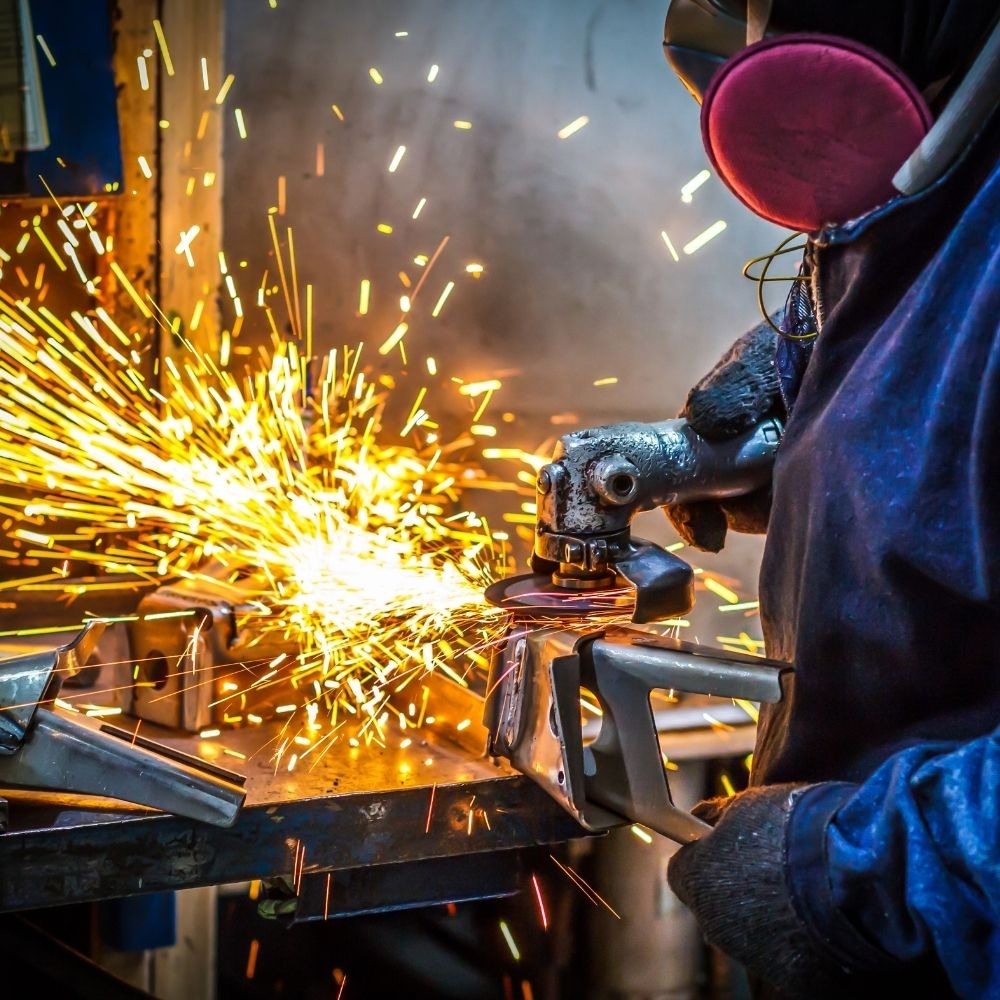
The TS EN ISO 9606-1 standard is a certification standard that verifies the technical competence of personnel performing welding operations on steel materials at an international level. This certificate evaluates not only the theoretical knowledge level of welders but also their practical skills under real production conditions, creating a critical verification mechanism in terms of structural safety. Since welding operations in industrial production form the most sensitive joint points of load-bearing systems, minimizing errors caused by the human factor is the primary objective of this standard.
The ISO 9606-1 standard applies specific testing procedures when determining welder qualification. Candidates perform welding operations on test specimens that represent real production environments, and these specimens are then analyzed using destructive and non-destructive testing methods. In this way, the quality of the weld seam, penetration structure, continuity, and potential defects are evaluated objectively. This process ensures that welder qualification is based not only on observation but also on measurable technical data.
The main purpose of this standard is to control welding operations in industrial production and ensure structural safety. Even a minor application error in welded manufacturing can lead to major structural risks. Especially in steel constructions, bridge systems, pressure vessels, and industrial facilities, welding quality is directly related to human safety. Therefore, certifying welders according to specific standards has become mandatory.
ISO 9606-1 is a standard that affects not only individual skills but also the production system itself. Certified welders are required to work in accordance with specific procedures and technical rules. This approach eliminates randomness in production processes and ensures that all welding operations are carried out at consistent quality levels.
The standard also requires welders to be evaluated separately for specific material groups, welding methods, and positions. Thanks to this structure, each welder can only work within their area of competence, and the risk of errors in production processes is significantly reduced.
From an industrial production perspective, the ISO 9606-1 certificate is not just a document but also an internationally recognized indicator of safety and quality. Welders who hold this certificate prove that they possess the technical competence required to take part in global projects.
Main Purpose of the Standard
The TS EN ISO 9606-1 standard aims to increase structural safety and standardize production quality at an international level by controlling the human factor in welding operations.
As a result, TS EN ISO 9606-1 is one of the most critical personnel qualification standards that ensures the reliability of welded manufacturing in modern industrial production. Thanks to this structure, both quality and structural safety are guaranteed at an international scale.
Material Group, Welding Method and Position Criteria
Within the scope of the TS EN ISO 9606-1 standard, one of the most critical evaluation areas in determining welder qualification is the clear definition of on which material groups, with which welding methods, and in which positions welding operations can be performed. This approach considers welder qualification not as a single general skill, but as a multidimensional competency matrix based on different technical combinations. Because in industrial welded manufacturing processes, each material and each method exhibits different behavioral characteristics.
Material groups are classified according to the chemical composition, strength level, and welding behavior of steels. Low-alloy steels, high-strength steels, and materials with different carbon contents exhibit different heat input and cooling characteristics during welding. Therefore, welders are not expected to demonstrate the same performance across all material groups; instead, they must be certified separately for specific groups.
The welding method criterion is one of the most important technical components of the qualification system. Welding methods such as MIG, MAG, TIG, and shielded metal arc welding have different melting behaviors and technical control requirements. Therefore, a welder being competent in one method does not mean they can demonstrate the same performance in others. Each method is evaluated and certified as a separate qualification field.
Position criteria refer to the varying technical difficulty levels depending on the physical orientation of the welding operation. Welding performed in different working angles such as horizontal (PA), horizontal-rotated (PB), vertical (PC), overhead (PD), and pipe positions (PF) requires different levels of skill from the operator. Especially overhead and vertical positions require higher control capability due to the effect of gravity.
When these three criteria are evaluated together, it becomes clear that welder qualification is based on a highly detailed technical framework. The combination of material group, welding method, and position forms the fundamental parameters that determine under which production conditions a welder can operate. This structure ensures controllability and standardization in production processes.
From an industrial production perspective, this system enables project-based welder assignment. Since each project contains different technical requirements, manufacturers can assign only appropriately certified welders to specific tasks. This approach both increases quality and reduces structural safety risks.
This structure of the ISO 9606-1 standard aims to control production variability arising from the human factor. As a result, welding operations become independent of individual experience and are carried out within a standardized production system.
Importance of the Technical Combination Structure
The combined evaluation of material group, welding method, and position criteria transforms welder qualification into a multidimensional engineering system and directly supports structural safety.
Within the scope of TS EN ISO 9606-1, material, method, and position criteria form the foundation of quality control in welded manufacturing. Thanks to this structure, production processes become more predictable, reliable, and compliant with standards.
The Role of Personnel Competence in Welding Quality
One of the most critical factors determining the final product quality in welded manufacturing processes is the technical competence of the personnel performing the welding operation. The TS EN ISO 9606-1 standard systematically measures and certifies this competence, recognizing that welding quality is not solely dependent on equipment or material, but also directly influenced by human factors. Even under identical production conditions, differences in welder performance can lead to significant variations in weld quality.
The competence of welding personnel includes not only manual skill, but also the ability to correctly control parameters such as heat input, welding speed, electrode angle, and molten pool management. Even minor deviations in these variables can cause defects such as cracks, porosity, or lack of penetration in the weld seam. Therefore, the ISO 9606-1 standard aims to minimize variability in welding quality by ensuring that all welders operate at a defined and measurable competence level.
Welder competence is not limited to technical application skills. It also includes the ability to read and interpret technical drawings, understand WPS (Welding Procedure Specification) documents, and follow defined production procedures accurately. Therefore, certified welders are considered not only operators but also integral components of the overall quality management system.
The standard ensures that welder competence remains dynamic rather than static. Qualification certificates are subject to periodic renewal, requiring welders to maintain their skills and adapt to technological advancements and updated production requirements. This approach guarantees the sustainability of welding quality over time.
Competent welding personnel play a crucial role in preventing defects before they occur. By understanding material behavior and process limitations, qualified welders can anticipate potential issues and take preventive actions during production. This reduces rework, minimizes production costs, and increases overall efficiency.
From a structural safety perspective, the importance of personnel competence becomes even more evident. Since welded joints are often the most critical points in load-bearing systems, any defect caused by insufficient skill can directly compromise the integrity of the entire structure. Therefore, ensuring welder competence is essential not only for quality but also for safety.
Impact of Personnel Competence on Quality
Welding quality is directly influenced by the skill level of the operator, and ISO 9606-1 transforms this skill into a measurable and standardized parameter.
Within the scope of TS EN ISO 9606-1, personnel competence is positioned as a fundamental pillar of welded manufacturing quality systems. Through standardized evaluation and certification processes, the variability caused by human factors is minimized, ensuring consistent, reliable, and safe production outcomes.
Relationship with EN ISO 3834-2 and the EN 1090 Process
The TS EN ISO 9606-1 standard is not an independent quality element on its own, but rather functions as part of an integrated system together with EN ISO 3834-2 and EN 1090 standards. These three standards form a comprehensive control mechanism that encompasses the human factor, production processes, and product compliance in welded manufacturing. Therefore, welder qualification should be evaluated not only individually but also as a component of the overall quality system.
EN ISO 3834-2 defines quality requirements for welding operations. This standard regulates how welding processes should be planned, controlled, and documented. It covers elements such as welding procedures, equipment suitability, quality control steps, and personnel competence. In this context, ISO 9606-1 certified welders represent the personnel competence component of this system.
The EN 1090 standard, on the other hand, defines the production and conformity requirements of steel and aluminum structural components. Within this framework, the presence of certified welders is a fundamental requirement for ensuring production quality and structural safety. Since welding operations are one of the most critical stages in structural manufacturing, the use of qualified personnel is mandatory for EN 1090 compliance.
These three standards form a complementary structure. ISO 9606-1 ensures individual competence, EN ISO 3834-2 guarantees process quality, and EN 1090 defines product conformity. This integrated system ensures that welded manufacturing is carried out in a controlled, traceable, and standardized manner.
Traceability is one of the most important outcomes of this integration. Through the combined application of these standards, it becomes possible to track which welder performed which operation, under which procedure, and with what results. This level of transparency significantly increases reliability in production processes.
From a regulatory perspective, these standards also ensure legal compliance. Without meeting these requirements, it is not possible to place structural metal components on the European market. Therefore, ISO 9606-1 certification is not only a technical requirement but also a commercial necessity.
Structure of Standard Integration
The integration of ISO 9606-1, EN ISO 3834-2, and EN 1090 creates a comprehensive quality and safety system in welded manufacturing.
In conclusion, the relationship between ISO 9606-1, EN ISO 3834-2, and EN 1090 forms the foundation of modern welding systems. Through this integration, international standards of quality, safety, and compliance are ensured in industrial production.
Workforce Competence in Welded Manufacturing
In welded manufacturing processes, workforce competence is considered one of the most critical factors in ensuring the sustainability of production quality. The TS EN ISO 9606-1 standard verifies the individual technical skills of welders and ensures that personnel involved in production meet defined quality levels. This approach eliminates the use of uncontrolled or unqualified labor in production processes and ensures that all welding operations are carried out in accordance with established standards.
Workforce competence is not limited to the ability to perform welding alone; it also includes the ability to read technical documentation, apply welding procedures, and work in accordance with production instructions. Therefore, certified welders act not only as operators but also as active components of the quality system within the production line. This structure ensures that production processes are based on systematic standards rather than individual experience.
In industrial production, workforce competence is one of the fundamental components of production planning. Since each project has different technical requirements, welders must be assigned according to their relevant certifications. For example, different material groups, welding methods, and positions require different levels of expertise, and workforce allocation is planned accordingly. This approach increases production efficiency while ensuring consistency in quality.
Within the scope of the ISO 9606-1 standard, workforce competence is periodically re-evaluated. This ensures that welders’ technical skills remain up to date and that they can adapt to evolving production technologies. As a result, a dynamic and continuously improving workforce model is established rather than a static one.
Workforce competence also plays an important role in reducing production errors. Certified personnel can manage welding parameters correctly and minimize the risk of defects. This reduces the need for rework and contributes to better cost control in production.
From an occupational safety perspective, qualified welders not only improve product quality but also enhance workplace safety. Processes involving high temperatures, electric arcs, and molten metal require controlled execution, which can only be ensured by trained and certified personnel.
Strategic Impact of Workforce Competence
Workforce competence in welded manufacturing is a strategic management factor that simultaneously affects quality, safety, and efficiency.
Within the scope of TS EN ISO 9606-1, workforce competence is one of the fundamental pillars of modern welded manufacturing processes. With certified welders, production processes become more reliable, controlled, and compliant with standards, ensuring the highest level of structural safety.
Reliability of Certified Welders in Industrial Production
The use of certified welders in industrial production processes is not only a quality control requirement but also a strategic necessity in terms of structural safety and production continuity. The TS EN ISO 9606-1 standard increases reliability in production processes by ensuring that welders are tested according to specific technical criteria and that their competence is verified at an international level. Through this structure, uncertainties arising from the human factor in welded manufacturing are minimized, and production quality is maintained at a consistent standard level.
Certified welders are not only executors in production processes but also active components of the quality system. Being authorized for specific material groups, welding methods, and positions significantly reduces the risk of errors during production. This approach provides a critical safety advantage, especially in load-bearing systems, steel structures, bridge components, and industrial facility manufacturing.
Within the scope of the ISO 9606-1 standard, certified welders play an important role in production planning. Since each project has different technical requirements, welders must be assigned according to their certifications. This prevents the use of uncontrolled labor in production processes and ensures quality standardization. At the same time, production efficiency is increased and the need for rework is reduced.
The contribution of certified welders to production processes is not limited to technical skills. These personnel also play a key role in compliance with welding procedures (WPS), awareness of quality control, and adherence to production discipline. This supports the development of a systematic quality culture within production environments.
The use of certified welders in industrial production also provides a critical advantage in terms of occupational safety. Since welding operations involve risks such as high temperatures, electric arcs, and molten metal, the use of trained and certified personnel becomes essential. This approach increases both worker safety and production reliability.
In international projects, the use of certified welders provides manufacturers with a significant competitive advantage. Companies employing personnel in compliance with the ISO 9606-1 standard become more reliable and preferred suppliers in global markets. This is especially a key factor for access to the European market.
Impact of Certified Welder Reliability
Welders certified according to TS EN ISO 9606-1 form the foundation of reliability in industrial production by ensuring quality, safety, and compliance with standards.
As a result, the reliability provided by certified welders in industrial production is an indispensable component of modern manufacturing processes. Through this structure, production processes become more controlled, reliable, and compliant with international standards, ensuring the highest level of structural safety.